


7 Money Habits That Quietly Keep People Broke
You don’t have to be terrible with money to struggle financially.
You can have a steady paycheck, pay your bills on time, avoid expensive vacations, and still reach the end of every month wondering where your money went.
That’s because some of the habits that hurt our finances don’t look particularly dangerous.
A $7 subscription doesn’t feel like a problem. Ordering takeout after a long day doesn’t feel like a financial decision. Increasing your lifestyle after getting a raise feels deserved. Putting off investing for “when you make more” sounds reasonable.
The problem is what happens when these small decisions become permanent.
The Federal Reserve’s latest survey of U.S. households found that 63% of adults said they could cover a hypothetical $400 emergency using cash, savings, or a credit card they could pay off at the next statement. Meanwhile, 30% said they could not cover three months of expenses through savings, borrowing, selling assets, or other available resources.
Financial problems aren’t always caused by one catastrophic mistake.
Sometimes they’re built quietly, one ordinary habit at a time.
Here are seven worth looking at.
1. Increasing Your Lifestyle Every Time Your Income Goes Up

Getting a raise should make you richer.
But for many people, it simply makes their life more expensive.
The old car becomes a newer car. The basic apartment becomes a nicer one. A few inexpensive meals out become regular restaurant visits. Suddenly there’s a premium streaming service, a more expensive phone plan, frequent deliveries and a growing collection of subscriptions.
Nothing feels outrageous.
That’s what makes lifestyle inflation so effective.
Imagine someone receives a $600 monthly raise. Instead of allowing even part of that increase to build savings or investments, they gradually absorb the entire amount into their lifestyle.
After a year, they may genuinely feel as though they didn’t get a raise at all.
The danger isn’t spending money on things you enjoy. Money is supposed to improve your life.
The danger is making every increase in income disappear into a higher standard of living.
A better approach is to decide in advance where additional income will go. You might use part for better living, part for financial goals and part for investing or debt reduction.
That way, earning more actually changes your financial position.
2. Treating Small Purchases as Too Small to Matter
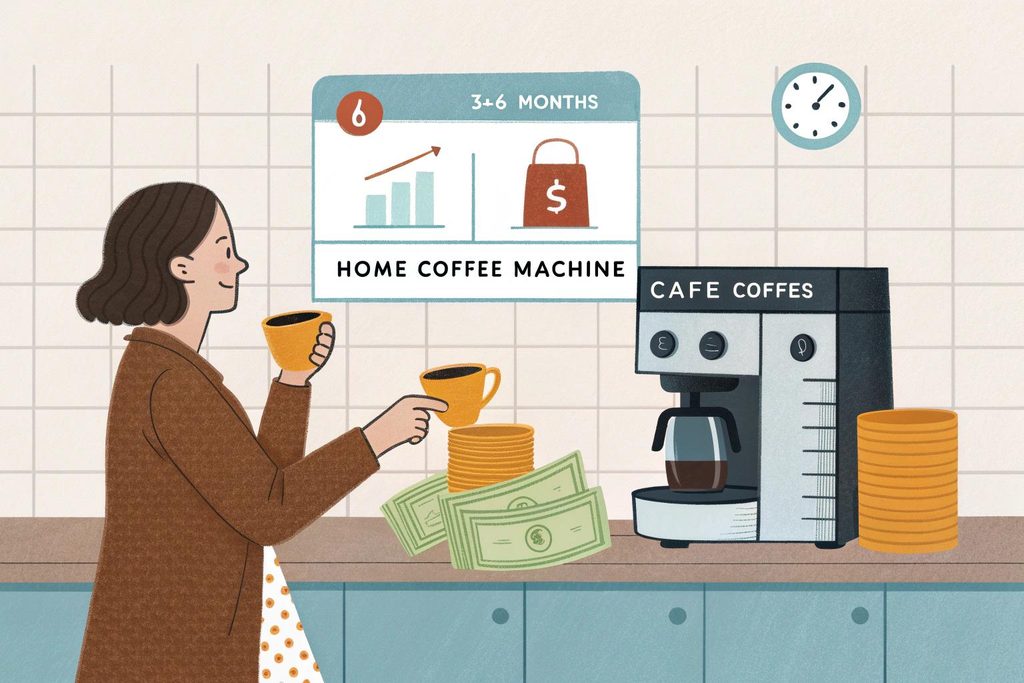
“It’s only $5.”
That’s one of the most expensive sentences in personal finance.
A single small purchase usually isn’t the problem. The problem is repetition.
A $5 purchase made every weekday is about $100 a month. That’s $1,200 a year before considering what that money could have earned if it had been saved or invested.
And the purchases don’t have to be coffee.
They can be delivery fees, convenience-store snacks, unused apps, impulse purchases, digital subscriptions or frequent little upgrades.
The Consumer Financial Protection Bureau recommends looking carefully at actual spending, including irregular expenses, rather than relying on memory or rough estimates.
That’s because humans are surprisingly bad at mentally adding up dozens of small transactions.
One $8 purchase is forgettable.
A hundred of them isn’t.
The solution isn’t to become obsessed with every dollar. It’s to identify the categories where “small” spending happens repeatedly.
You may discover that the biggest leak in your budget isn’t one huge expense.
It’s a hundred tiny holes.
3. Spending First and Saving Whatever Is Left

For many people, saving works like this:
Paycheck arrives.
Bills get paid.
Shopping happens.
Entertainment happens.
A few unexpected expenses appear.
Then, near the end of the month, whatever remains is supposed to become savings.
The problem is that there may be nothing left.
This turns saving into a competition between your financial goals and everything else you want to spend money on.
A more reliable system is to reverse the order.
When your income arrives, move a predetermined amount toward savings or another financial goal before the money gets absorbed into everyday spending.
The amount doesn’t have to be 20%. It doesn’t even have to be 10%.
The important part is creating a repeatable system that works with your actual income and expenses.
The CFPB notes that creating a realistic picture of income and spending is an important first step in building a workable budget.
Even a modest automatic contribution can eventually become significant because money that is consistently set aside gets an opportunity to accumulate.
And once saving becomes automatic, you don’t have to rely on motivation every month.
4. Carrying Expensive Debt While Trying to “Invest Your Way Out”

There is a certain appeal to investing while carrying debt.
You imagine your investments growing in the background while you continue making debt payments.
Sometimes that can make sense depending on the type of debt, its interest rate, taxes, employer benefits and your overall financial situation.
But high-interest consumer debt deserves special attention.
Investor.gov, the SEC’s investor education website, specifically lists paying off credit cards or other high-interest debt as part of its basic saving-and-investing roadmap.
Why?
Because interest works in both directions.
When you own an investment, compound growth can help your money grow.
When you carry expensive debt, compounding interest can work against you.
That doesn’t mean every person should stop investing until they have zero debt. Retirement contributions, employer matches and other factors can change the calculation.
But if a large portion of your income is being consumed by high-interest debt, ignoring it while chasing investment returns can leave you running in place.
Before asking, “What should I invest in?” sometimes the better question is:
“What is currently charging me the most to remain in debt?”
5. Having No Emergency Fund

A financial plan can look perfect on paper until something goes wrong.
The car needs a major repair.
The refrigerator dies.
A medical bill arrives.
Your hours at work are reduced.
Suddenly the question isn’t whether you can afford to invest another $200 this month.
It’s whether you can handle the unexpected expense without borrowing money.
The Federal Reserve’s 2025 household survey found that 63% of adults could cover a hypothetical $400 emergency using cash, savings or a credit card they could pay off immediately. That also means a substantial minority would need another solution.
An emergency fund isn’t exciting.
It doesn’t give you a screenshot-worthy investment portfolio.
Its job is simpler: to stop an unexpected expense from becoming a financial crisis.
Investor.gov similarly recommends keeping savings available for emergencies and notes that some people maintain enough savings to cover several months of expenses.
You don’t have to build a giant emergency fund overnight.
Start with a small target.
Then increase it.
The goal is to create enough financial breathing room that one bad Tuesday doesn’t turn into six months of debt.
6. Waiting Until You “Make More Money” to Get Serious About Your Finances

This one sounds logical.
“When I earn more, I’ll start saving.”
“When I get the promotion, I’ll invest.”
“When my business takes off, I’ll finally make a proper budget.”
But higher income doesn’t automatically produce financial security.
If spending rises alongside income, the person earning $100,000 can have the same problem as the person earning $50,000.
The numbers are simply bigger.
There is another cost to waiting: time.
Money invested for the long term can potentially benefit from compound growth, where returns themselves can generate additional returns. Investor.gov illustrates how even relatively small amounts can grow significantly over long periods when compounded.
That doesn’t mean everyone should rush into risky investments.
It means time is a financial resource.
You cannot go back and invest the money you could have invested ten years ago.
So instead of waiting for the perfect income level, start building the habits at the level you’re at.
You can increase the amounts later.
7. Spending Money to Look Like You’re Doing Well

This may be the quietest habit of all.
Sometimes we’re not buying something because we need it.
We’re buying what it represents.
The expensive car says we’re successful.
The designer item says we’ve made it.
The upgraded apartment says we’re moving up.
The elaborate vacation proves we’re doing fine.
There’s nothing inherently wrong with any of those purchases.
The problem starts when appearances become part of the financial plan.
Someone can look wealthy while having very little saved.
Someone else can drive an ordinary car while quietly accumulating investments, building an emergency fund and paying down debt.
The two people may look completely different from the outside.
You can’t see their bank accounts.
That’s why financial progress can be difficult to measure socially. You are often comparing your private finances with somebody else’s public consumption.
And that comparison can become expensive.
The goal isn’t to live like a monk.
It’s to make sure the things you buy are improving your life rather than proving something to other people.
The Real Problem Isn’t Any One Habit

None of these habits automatically makes someone financially irresponsible.
You can buy coffee.
You can eat at restaurants.
You can own a nice car.
You can enjoy your money.
You can even carry some debt while investing.
The problem is when spending becomes automatic and financial goals become whatever is left over.
The encouraging part is that the reverse is also true.
Small financial decisions can work in your favor when they become consistent.
A little money saved regularly can become meaningful over time. Investor.gov’s examples demonstrate how even small recurring savings can grow through compounding.
You don’t need to completely change your life tomorrow.
Start by finding one habit that’s quietly draining your money.
Track it.
Calculate what it costs over a year.
Then decide whether the benefit is actually worth the price.
Because getting better with money isn’t always about finding a spectacular investment or earning a huge salary.
Sometimes it starts with noticing where your money is quietly going.
And deciding that, from now on, you want to choose where it goes.